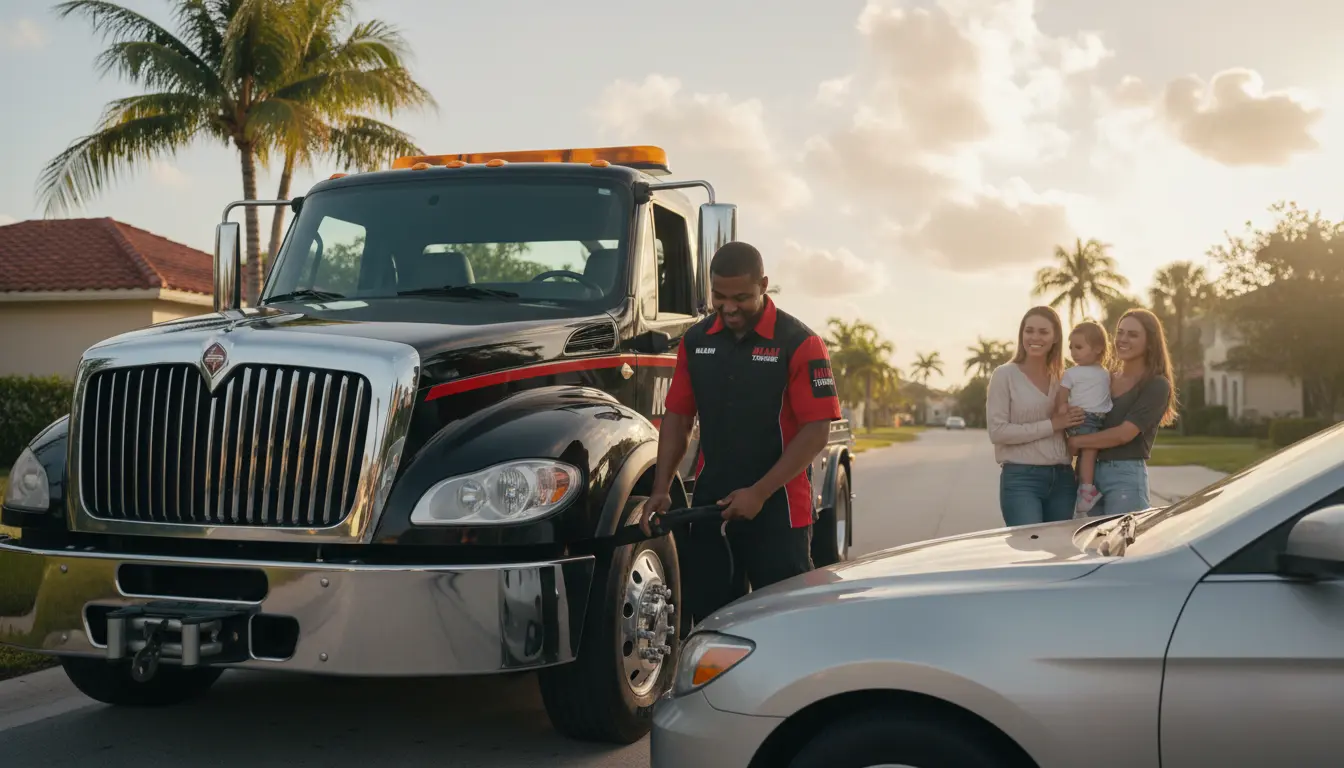
As the sun sets over Miami’s bustling highways, a lone driver faces a daunting reality: a disabled vehicle, stranded on the side of I-95, with no clear solution in sight. This is where professional towing and recovery services come into play, providing a lifeline for stranded motorists and a testament to the importance of swift, expert interventions. In Miami, FL, where extreme heat, sudden downpours, and heavy traffic can wreak havoc on vehicles, the need for reliable towing services is more pressing than ever.
The unique challenges posed by Miami’s climate and infrastructure demand a specialized approach to towing and recovery. From the sandy beaches to the dense urban jungles, each environment presents its own set of hazards and obstacles that require tailored solutions. As such, it is crucial for towing services to be well-versed in the nuances of Miami’s landscape, equipped with the right tools and expertise to handle any situation that may arise.
Miami Towing Service stands out as a premier provider of professional towing and recovery solutions in the area. With a deep understanding of the local conditions and a commitment to excellence, they offer a comprehensive range of services designed to meet the diverse needs of Miami’s drivers. From Flatbed Towing to Emergency Roadside Assistance, their expertise is unparalleled, making them the go-to choice for those seeking reliable, efficient, and safe vehicle recovery.
Technical Process
The technical process of towing and recovery involves a meticulous series of steps, each designed to ensure the safe and efficient transport of the vehicle. It begins with rapid dispatch, where the towing service deploys its team to the scene of the breakdown. Upon arrival, a thorough scene safety and assessment are conducted to identify potential hazards and determine the best course of action. This may involve the use of specialized tools such as hydraulic flatbeds, synthetic winch lines, and V-straps, each chosen for its ability to protect the vehicle and facilitate a smooth recovery process.
The loading process is equally critical, requiring precise maneuvering to secure the vehicle onto the tow truck. This step is particularly sensitive, as it demands a deep understanding of the vehicle’s specifications, including its weight, dimensions, and any special handling requirements. For instance, electric vehicles (EVs) require careful handling to prevent damage to their batteries and drivetrains, highlighting the need for towing services to be well-versed in the latest vehicle technologies.
Data Comparison
When considering the merits of different towing methods, it’s essential to examine the data. A comparison between Flatbed Towing and Wheel-Lift Towing reveals significant differences in terms of drivetrain protection, ideal vehicle type, and roadside clearance time.
| Feature/Metric | Flatbed Towing | Wheel-Lift Towing |
|---|---|---|
| Drivetrain Protection | High | Medium |
| Ideal Vehicle Type | All vehicles, especially low-clearance and heavy-duty | Light-duty vehicles, not recommended for low-clearance or heavy-duty |
| Roadside Clearance Time | Faster, especially for complex recoveries | Generally faster for simple, light-duty recoveries |
Source: TRAA Reference Guide
Expert Insights
For those awaiting towing assistance on the side of the road, particularly on high-risk areas like the Palmetto Expressway, it’s crucial to follow best practices to ensure safety. This includes moving to a safe location away from traffic, engaging hazard lights, and avoiding any actions that could exacerbate the situation, such as attempting to drive a vehicle with a flat tire or a malfunctioning brake system.
Moreover, understanding how to properly prepare a vehicle for towing, such as putting an EV into tow mode or securing loose parts, can significantly reduce the risk of damage during transport. It’s also vital for drivers to be aware of common mistakes, such as leaving the parking brake on during wheel-lift towing, which can lead to severe consequences including transmission destruction or frame bending.
Pricing
The cost of towing and recovery services can vary widely, depending on several factors including the type of vehicle, the distance to be towed, and the complexity of the recovery. Standard hook-up fees, per-mile transport rates, and fixed rates for specific services like jump-starts or lockouts are common pricing structures. Additionally, factors such as off-road or ditch winching, the need for heavy-duty versus light-duty equipment, and specialized handling for exotic or low-clearance vehicles can influence the final cost.
- Standard hook-up fees for light-duty vehicles
- Per-mile rates for transport, which can vary based on the distance and type of vehicle
- Fixed rates for services such as battery jump-starts, fuel delivery, or car lockout services
Safety & Standards
Safety and compliance with industry standards are paramount in the towing and recovery industry. Certifications such as WreckMaster or TRAA signify a towing service’s commitment to excellence and adherence to strict safety protocols. These standards are crucial for preventing secondary accidents, ensuring the structural integrity of towed vehicles, and protecting pedestrians and drivers. Moreover, compliance with DOT regulations is essential for the safe transport of vehicles on public roads, underscoring the importance of choosing a towing service that prioritizes safety above all else.
FAQ
What should I do if my vehicle breaks down on the highway?
If your vehicle breaks down on the highway, the first step is to move to a safe location, away from the flow of traffic. Engage your hazard lights to alert other drivers and consider calling a professional towing service. It’s also a good idea to have a roadside emergency kit in your vehicle, which should include items like a spare tire, jumper cables, and a flashlight.
How do I choose the right towing service for my needs?
Choosing the right towing service involves considering several factors, including the type of vehicle you have, the services offered by the towing company, and their reputation in the community. Look for a service that is certified by a reputable organization, such as the TRAA, and has experience handling vehicles like yours. It’s also important to read reviews and ask for referrals to get a sense of the service’s reliability and customer satisfaction.
What is the difference between flatbed towing and wheel-lift towing?
Flatbed towing and wheel-lift towing are two different methods used to transport vehicles. Flatbed towing involves loading the vehicle onto a flatbed truck, where it is secured and transported. This method is ideal for all types of vehicles, especially those that are low-clearance, heavy-duty, or have been in an accident. Wheel-lift towing, on the other hand, uses a hydraulic lift to suspend the vehicle by its wheels, which are then secured to the tow truck. This method is generally faster and more suitable for light-duty vehicles but may not be appropriate for all vehicle types.
Professional Towing & Recovery in Miami, FL
In conclusion, the importance of professional towing and recovery services in Miami, FL, cannot be overstated. With its unique climate and infrastructure challenges, the city demands a specialized approach to vehicle recovery. Miami Towing Service, with its commitment to safety, expertise, and customer satisfaction, stands as a beacon of reliability in the face of vehicle breakdowns and accidents. Whether you’re dealing with a flat tire, a dead battery, or a complex recovery situation, their team is equipped to handle it with precision and care, making them the premier choice for towing and recovery needs in Miami.