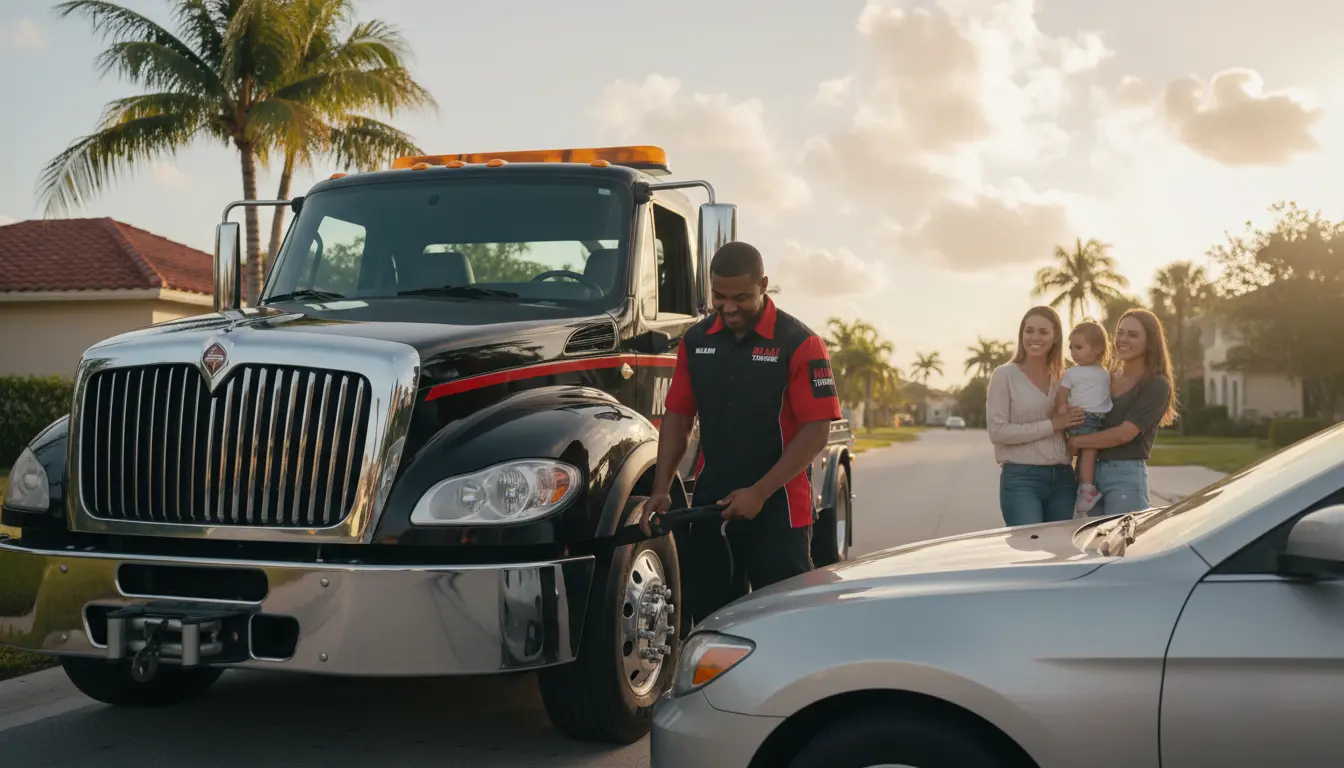
Imagine cruising down Ocean Drive in Miami, soaking in the vibrant atmosphere, only to return and find your car vanished—towed away without warning. It’s a nightmare scenario that catches many drivers off guard in the Magic City. With its bustling streets, strict parking enforcement, and unique coastal challenges, Miami enforces some of the toughest towing regulations in Florida. Whether you’re a local zipping through Coconut Grove or a visitor exploring Aventura, understanding these rules is crucial to avoid hefty fines and unexpected headaches.
At Miami Towing Service, we’ve helped countless drivers recover their vehicles and navigate the towing maze. In this guide, we’ll break down the top towing regulations every Miami driver must know. From parking dos and don’ts to your rights during a tow, you’ll get practical advice to keep your ride safe. Let’s dive in and ensure your next Miami adventure stays smooth-sailing.
Understanding Miami’s Core Towing Laws
Miami’s towing regulations are governed by a mix of city ordinances, Florida state laws, and specific rules from the Florida Department of Highway Safety and Motor Vehicles (DHSMV). These laws aim to keep streets clear, protect public safety, and prevent illegal parking from disrupting the flow of traffic in this high-density urban area.
Key Florida State Towing Statutes
Under Florida Statute 715.07, property owners and towing companies must follow strict guidelines for non-consensual tows. This means no vehicle can be towed from private property without proper signage—at least one sign per entrance, clearly visible, stating towing policies. In Miami, violations can lead to fines up to $500 for the towing company, but drivers still face storage fees that add up quickly.
Practical tip: Always scout for "No Parking" or "Towing Enforced" signs before leaving your car. In busy spots like South Beach, these signs are everywhere, and enforcement is relentless, especially during events like Ultra Music Festival.
Miami-Dade County Specifics
Miami-Dade County adds layers with its own codes. For instance, vehicles parked in fire lanes or blocking handicapped spots can be towed immediately, no questions asked. The county requires towing operators to be licensed and bonded, ensuring companies like Miami Towing Service adhere to ethical standards.
Actionable advice: If you’re towing a larger vehicle like an RV through Miami, check out our RV towing services to comply with size restrictions on bridges like the Julia Tuttle Causeway. Oversized vehicles often trigger special permits—don’t risk a tow by ignoring them.
Common Towing Violations in Miami
Miami’s tropical vibe comes with unique challenges: think flooded streets during hurricane season or packed lots near Marlins Park. Knowing the hot spots for tows can save you from surprises.
Illegal Parking in High-Traffic Areas
Parking in no-parking zones, especially along Biscayne Boulevard or in Hollywood beachfronts, is a top offender. Miami code enforcement patrols these areas 24/7, and tows happen within minutes. Fines start at $100, plus towing and storage fees that can exceed $300 in the first day.
Local reference: In Doral, near the Dolphin Mall, shoppers often get towed for blocking loading zones. Pro tip: Use apps like ParkMobile to find legal spots and pay meters remotely—it’s a game-changer for avoiding violations.
Overnight and Residential Parking Rules
Many Miami neighborhoods, including parts of Pembroke Pines, ban overnight street parking from 2 a.m. to 5 a.m. to encourage garage use and reduce clutter. HOA communities amplify this with private towing contracts.
Actionable advice: If your vehicle breaks down at night, opt for breakdown towing right away. Delaying could lead to a municipal tow, complicating recovery.
Your Rights as a Towed Driver
Getting towed doesn’t mean you’re powerless. Florida law empowers drivers with clear rights to protect against abusive practices.
Notification and Release Procedures
Towing companies must notify the registered owner within 30 minutes of the tow via the DHSMV database. You have the right to inspect your vehicle for damage before paying fees. In Miami, release lots operate 24/7, but expect waits during peak hours.
Practical tip: Keep your registration and insurance handy. When retrieving your car, demand an itemized fee receipt—standard rates are $150 for the tow plus $30 per day storage, but extras like after-hours fees must be justified.
Challenging Unfair Tows
If you believe the tow was wrongful, file a complaint with Miami’s Code Enforcement or the DHSMV. You can sue for up to three times the towing costs if the company violated signage rules.
H3: When to Call for Professional Help
Sometimes, prevention turns into recovery. If you’re locked out after a stressful tow situation, our car lockout service can get you back on the road fast without adding to the drama.
Tips to Avoid Towing Pitfalls in Miami
Armed with knowledge, you can steer clear of tows. Here are actionable strategies tailored to Miami’s driving scene.
Smart Parking Habits
-
Double-Check Signs and Markings: Miami’s faded curb paint can trick you—look for yellow or red zones indicating no parking.
-
Use Designated Lots: For events at the American Airlines Arena, pre-book spots to dodge street tows.
-
Time Your Parking: Avoid rush hours (7-9 a.m., 4-7 p.m.) when patrols intensify in areas like Downtown Miami.
Local reference: In Coconut Grove’s bohemian streets, residential permit parking is strict—visitors should use public garages to stay compliant.
Vehicle Prep for Towing Risks
Keep a roadside kit with flares and a charged phone. For boat owners navigating Miami’s waterways, ensure trailers comply with weight limits; otherwise, boat towing becomes essential to avoid on-the-spot impounds.
Actionable advice: Download the Miami Parking app for real-time enforcement updates. It’s especially useful in Aventura’s shopping districts where tows spike during holidays.
Emergency Response Planning
If a breakdown looms, don’t wait for a tow truck to arrive uninvited. Contact Miami Towing Service immediately for vehicle towing service—we’re faster and fairer than city impounds.
FAQ: Common Questions About Miami Towing Regulations
1. How much does it cost to get a towed vehicle back in Miami?
Costs vary, but expect $150-$250 for the tow, plus $20-$50 daily storage. Miami caps fees to prevent gouging, but act fast to minimize charges.
2. Can I get my car back without paying the tow fee?
No, payment is required upfront, but you can contest it later through small claims court if the tow was improper.
3. What if my vehicle is towed from private property like an apartment complex?
The property must have visible signs. If not, the tow may be invalid—contact the towing company and cite Florida Statute 715.07.
4. Are there special rules for electric vehicles or EVs in Miami?
EVs get priority in designated charging spots; parking there without charging can lead to immediate tows under city green initiatives.
5. How do I find where my towed car is in Miami?
Call Miami-Dade Towing at (305) 593-6036 or use the online impound locator on miamidade.gov. For faster service, reach out to us at Miami Towing Service.
Wrapping Up: Stay Towed-Free in Miami
Miami’s towing regulations might seem daunting, but with this knowledge, you’re equipped to drive confidently through its sun-soaked streets. From mastering parking signs in Doral to understanding your rights during a tow in Hollywood, prevention is your best ally. Remember, a little vigilance goes a long way in avoiding the stress of impound lots.
At Miami Towing Service, we’re here to support you with reliable, regulation-compliant towing solutions across Miami-Dade. Whether it’s a routine vehicle towing service or an emergency in Coconut Grove, our team is just a call away. Don’t let towing woes derail your day—contact us today at (305) 871-9760 for expert assistance and peace of mind on the road.